
How to Choose the Right Design Partner for your Project

designer working on a tablet

Follow these steps to ensure you choose the right design partner for your project.

Finding the right partner for your production project can feel daunting. One of the most important parts of this decision is making sure you pick the right partner in design. The design stage of any project is extremely important and acts as the base for your product. Make sure to consider the steps below when choosing your design partner. 

Commitment to Your Project

Your design partner’s commitment to your project should be apparent and definite. This means that your designers should be easy to get into contact with, respond quickly to inquiries, take your concerns and opinions into account when completing the design, and complete all necessary preparations and research before beginning the design.
Dedicated Team

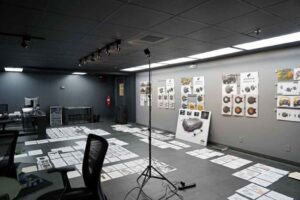
A dedicated design team means applying years of experience to every project. This involves both industrial designers and engineers that are consistently in contact with your project team and provide an open and clear channel of communication throughout the design project. One great way to make sure that a design team is dedicated is asking for references, looking at past projects they have completed, asking how they keep in contact with their project teams, and the complexity of past projects they have done. Asking these questions will set your team and your project up for success. 
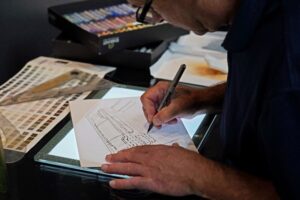
designer drafting an image

Understanding of your Needs

Being on the same page with your design partner is one of the most critical aspects of creating a product you are proud of. This means that both your team and your design partner share an understanding of the following aspects of your projects:

  • Goal Product
    • This means sharing the same vision for what your final product will look like, how it will function, and who will use it.
  • Testing Results
    • Whether you are testing for strength, rigidity, load-bearing limits, or something else; being on the same page with your design partner about what you would like those test results to be and designing a product that will accomplish the results you are looking for is key.
  • Functionality
    • While this may seem obvious, knowing the end function of the product is an important part of the discussion with your design partner. Knowing what you see as the end-user for your product, how it is expected to function daily, if/how often it will need to travel, the size parameters for this project, etc. are extremely important to discuss upfront with your design team.
  • Material Quality
    • Knowing what type of material you expect to be included in your project and the quality of that material is critical to the design process. This means discussing the type of material you would like to use, other materials that can be incorporated if needed, the cost of those materials, the reusable nature of the material, the look of the material, and so much more needs to be considered at this early step as well.
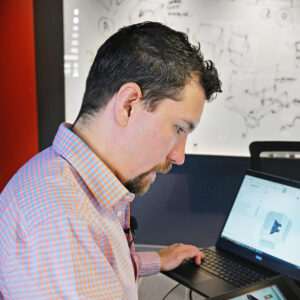
alex greene

Design and Engineering Capabilities

Lastly, but perhaps the most important part of the process, is knowing your design partner’s capabilities. This doesn’t just mean the design programs they use; it also means understanding how your design partner communicates their designs with the engineering team on the project, what projects they have completed in the past, the scale of projects they have worked on, and their timeline for small and large projects. Evaluating these capabilities from the start helps you to know whether your processes are aligned.
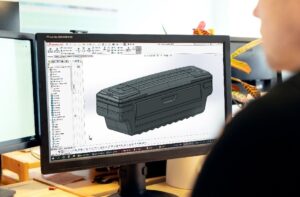
rendering on computer

Choosing a design partner can be difficult but when you follow these steps it should make it a little easier. Be sure to keep in mind that your designer should show commitment to your project, have a dedicated team with plenty of experience, have a good understanding of your project needs, and demonstrate exemplary design and engineering capabilities. If you would like to learn more about our Studio 540 design team feel free to read more here and contact us!

A Peak into our New Product Development Process

From ideation to creation, a look into how the new product development process works at TriEnda.

The new product development team’s motto here at KFI is from an African proverb, “If you want to go fast go alone, if you want to go far go together.” This speaks to the NPD team in the sense that creating new products is no easy process, but it is one of our favorite parts of the business because it truly employs every team in our company and calls on teamwork to make it happen. Come along with us as we speak with our New Product Development Manager, Heidi Bulgrin, to discuss the new product development process from ideation to creation.

Ideation

“It all starts with an idea,” Heidi said.  Sometimes this idea will come from a customer need, sometimes from an improvement we know we can make to an existing product; or sometimes it is a product missing from the world that we believe would change lives, efficiencies, or processes.

Research

Research is a key part of the process because this allows us to understand what market we think this product would fit into, what features this product needs to have, what similar products may already be out there, and where we can improve on what is already created. 

“We make sure we fully understand and document the product requirements and design inputs for design, performance, longevity, and technology that could take the product to another level,” Heidi said. 

Alignment

Once the research is compiled, a business case is presented to our leadership team for approval.  The business case includes a project timeline, specifications, features and benefits, options, and even details of which KFI facility is best suited for production, shipping expectations, and core competency evaluation. Our team also focuses on making sure that the new product idea is aligned with the KFI company values and strategy.

Once the new product idea is approved, a cross-functional team across all departments kicks off a new project. At this point, NPD converges with Marketing to evaluate findings from the research stage, and they collaborate and present a direction for the product.

Design

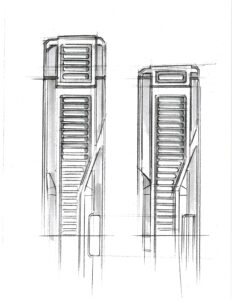
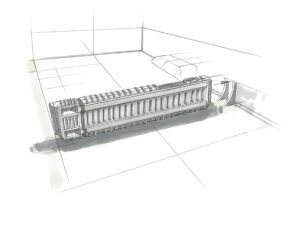
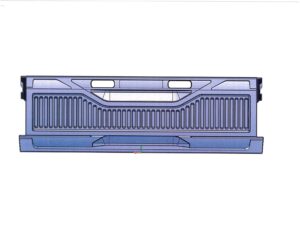
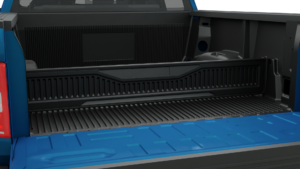
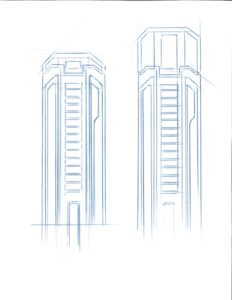
The next step connects us with Engineering and Studio 540 to create a quote, models, sketches, renderings, and other visual assets for our team and customers to review.  With over 25 years of technical experience in design and engineering, our Studio 540 and engineering teams know that making these visuals for a customer is a great way to share the product before any further development costs are spent.  

Once these concepts and quotes are approved by our internal team and the customer, a design is then kicked off and another review of the requirements is completed to ensure they are being met.  An initial FEA analysis is also completed to ensure the design is structurally functional. 

Samples

After the design is complete, patterns are built to create sample parts. This step is critical for initial testing, part fit-up, evaluating the parts, and making sure they meet all pre-determined criteria. Adjustment can be made at this step as needed. Adjustments can also be made as a result of test results or criteria changes at this time. Some examples of tests that are often run on our thermoformed products included RC9 and ASTM 1185 tests which are pallet standard tests, other predefined testing requirements for automotive products, drop tests, required department of transportation tests for automotive packaging, and many more.

Once sample part testing is complete, we move on to production tooling.  Samples from the new aluminum production tooling are again tested, go through part fit-ups, evaluate the parts, and make sure they meet all pre-determined criteria. Adjustments may be made here as needed.

Creation

Cross-functional teams including engineering, design, marketing, sales, manufacturing, quality, purchasing, warehouse management, and finance review all the production processes, quality check requirements, cost, and component availability to ensure a successful product launch. Detailed documentation of the entire process is also recorded ensuring many successful production runs in the future.

The production kicks off with marketing creating the materials and tools needed to help our customers understand the function and features of the new product, and finally we conduct a training for our sales team so they fully understand the uses, capabilities, and features of the new product. 

Customer-Specific Products

Some of our new products are made specifically for a certain customer. For a proprietary product, we also begin to develop marketing tools including web pages, spec sheets, technical literature, videos, renderings, and more soon after project kick-off. For a customer product, we will work with them on any support they may require.

While this is just a quick run-down of what is involved in the NPD process, it encapsulates the steps we try to follow and complete when creating a new product. If you are interested in learning more about our new product development process, feel free to contact us!